


The European Union allocates billions of euros to funding the research and development of medicines, vaccines, and other health technologies. The health cluster alone under Horizon Europe was allocated more than €8.2 billion for the 2021–2027 period. This investment supports the development of new products, but it does not in itself guarantee that they will be available, appropriate for the people who need them, or affordable. Many of the decisions that shape access are made before a medicine reaches health systems. Decisions about which diseases to research, product design, licensing, technology transfer, manufacturing, and the countries where regulatory approval is sought can either help products reach people or create barriers that are difficult to address later.
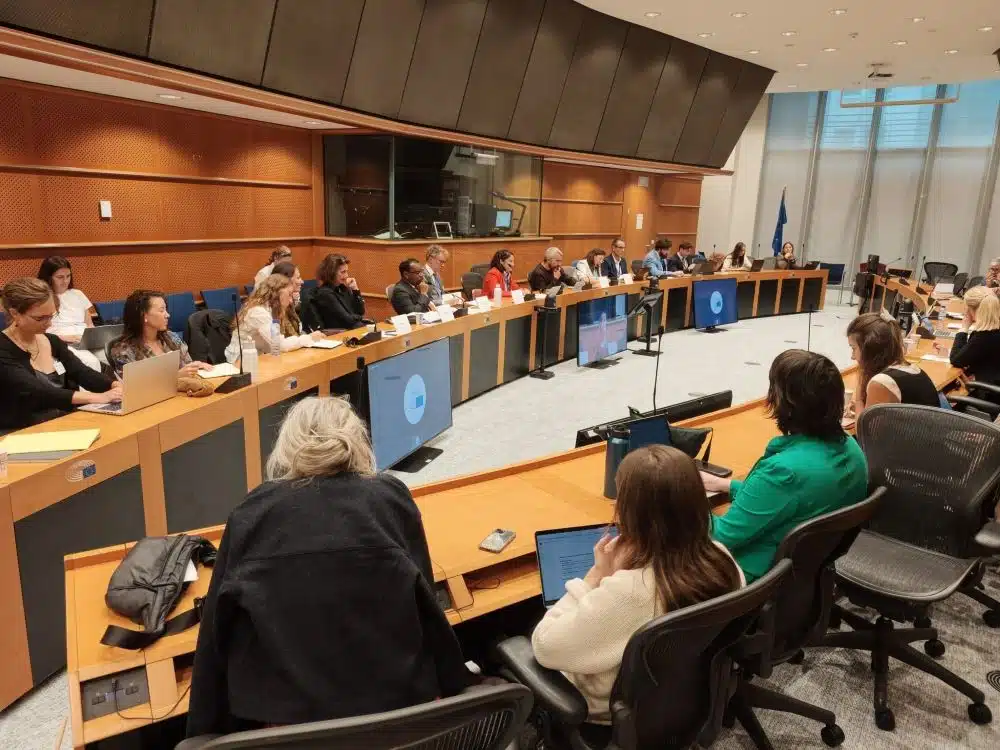
To discuss these issues, a few days ago at Salud por Derecho we organized an event at the European Parliament entitled Health Innovation for Public Benefit: Opportunities for Strengthening Access, Resilience and Competitiveness, together with the Medicines Patent Pool (MPP) and the Drugs for Neglected Diseases initiative (DNDi), hosted by Member of the European Parliament Nicolás González Casares. The event brought together European policymakers, government representatives, research funders, product developers, patients, and civil society.
The discussion focused on access planning, an approach that takes the needs of patients and health systems into account from the earliest stages of research. In practice, this means commitments on pricing, licensing, and technology transfer, as well as production capacity, supply, and product registration in the countries where products are needed. These conditions must be tailored to the type of technology and its stage of development. A project beginning in a laboratory cannot make the same commitments as one approaching clinical trials or manufacturing. There must, however, be a plan from the outset for how the results of the research will reach people, backed by clear obligations and mechanisms to monitor compliance.
The experiences shared during the event show that this approach can work. Since 2003, DNDi has developed 17 treatments for six diseases. Its model embeds access and affordability throughout product development, from identifying research needs to negotiating agreements with universities, pharmaceutical companies, and manufacturers. There are precedents within the European Union as well. Global Health EDCTP3, the European partnership that funds clinical research on infectious diseases in sub-Saharan Africa, includes affordable access among its obligations. The regulation governing the initiative states that the products and services developed with its support must be made available and accessible to the public on fair and reasonable terms.
We also discussed what this debate means for Europe. Health systems are faced with treatments that can bring enormous benefits, but whose high prices and impact on public budgets create barriers to access. Spain’s Secretary of State for Health, Javier Padilla, recalled that public authorities are involved throughout the development of medicines. They fund basic research, participate in clinical trials through public healthcare facilities, and ultimately pay for a large share of the resulting products. Acting only after a medicine has been authorized and is about to reach the market leaves little room to address problems. By then, rights over the technology, manufacturing decisions, and commercial agreements are usually already in place. Introducing conditions when public funding is awarded makes it possible to anticipate these issues and strengthen the negotiating position of public institutions.
The European Union is negotiating the design of its next research and innovation programme. The European Commission has proposed a budget of €175 billion for Horizon Europe for 2028–2034, a figure that must still be agreed with the European Parliament and the Council. These negotiations offer an opportunity to make access planning a standard part of European funding, from calls for proposals and grant agreements to project monitoring. This approach has also entered international agreements. The WHO Pandemic Agreement, adopted by the World Health Assembly in 2025, includes equitable and timely access among its objectives for vaccines, therapeutics, and diagnostics. The experience of COVID-19 showed that developing a technology quickly is not enough if it then fails to reach the countries and populations that need it most.
Public investment should deliver more than a new product. It should steer research towards health needs, anticipate production and supply problems, and help ensure that treatments reach the people who need them at prices health systems can afford.
You can watch the full event in this video:
—
Photo: Courtesy of MEP Nicolás González Casares’s office.


